
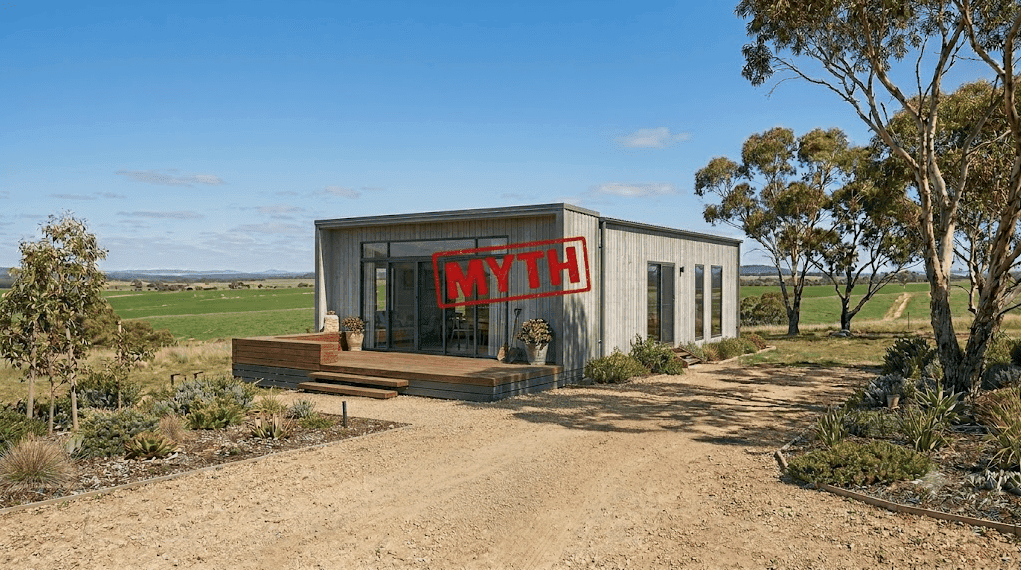
Have you ever been genuinely excited about building a modular home, only to talk yourself out of it the moment financing came up? It happens more than you’d think. Somewhere along the way, a handful of stubborn myths about modular finances take hold, steering perfectly good buyers away from a perfectly good option. At Modular WA, we work with clients across Western Australia every day, and we’re tired of watching misconceptions get in the way of great decisions. So let’s set the record straight, because the reality is a lot more encouraging than the rumours suggest.
Myth #1: Modular Homes Are Harder to Finance Than Traditional Builds

Modular homes are treated similarly to traditionally built homes by a growing number of lenders across Australia. Once a modular home is affixed to a permanent foundation on your land, it is legally classified as a permanent structure, falling under the same lending criteria as any conventional home. The idea that modular construction sits in some financial grey area is simply outdated thinking. Much of the confusion stems from people mixing up modular homes with mobile homes or container homes, which are entirely different products. Prefab modular homes built to Australian standards and affixed to a site are a whole different story.
One of the clearest signs that mainstream lending has caught up with modern modular construction is CommBank, one of Australia’s largest banks, offering a dedicated home loan pathway specifically for prefab homes. You can explore it at CommBank’s prefab home loan page. When one of the country’s biggest financial institutions creates a product specifically for prefab modular homes, it sends a clear message: modular is a legitimate, bankable option that gives first-time buyers the greater confidence they need to take that first step.
So what does the financing process actually look like in practice? For most buyers, it works similarly to any new home construction loan, with funds released in stages as the build progresses. Because modular projects move faster than traditional construction methods, the drawdown period is typically shorter, meaning less time paying construction-level interest before transitioning to a standard home loan. At Modular WA, our team works alongside lenders and brokers from day one, providing the fixed-price contracts and documentation that banks need to move forward with confidence.
Myth #2: You Need a Huge Deposit to Get Started

For modular homes constructed on owned land and built to local building codes, the security offered to a lender is essentially the same as a site-built home. Most lenders will look for between 10% and 20% deposit for a construction loan, with Lenders Mortgage Insurance (LMI) available to bridge the gap if needed. This is the same framework that applies for new home construction. We are also seeing new low-deposit loan products expand to include modular homes too – allowing people to own sooner.
For first-time buyers, the First Home Owner Grant (FHOG) in WA and stamp duty concessions can make a meaningful difference to how much you need upfront. Prefab homes are not excluded from these schemes. With a construction loan, you also only pay interest on funds drawn at any given time, not the full loan amount. Because modular construction moves faster than a traditional build, fewer drawdown stages are required, meaning lower interest costs overall during the building process. If you’ve been putting off getting pre-approved because the deposit felt out of reach, you might be surprised at what’s actually within reach.
Myth #3: Modular Homes Don’t Hold Their Value
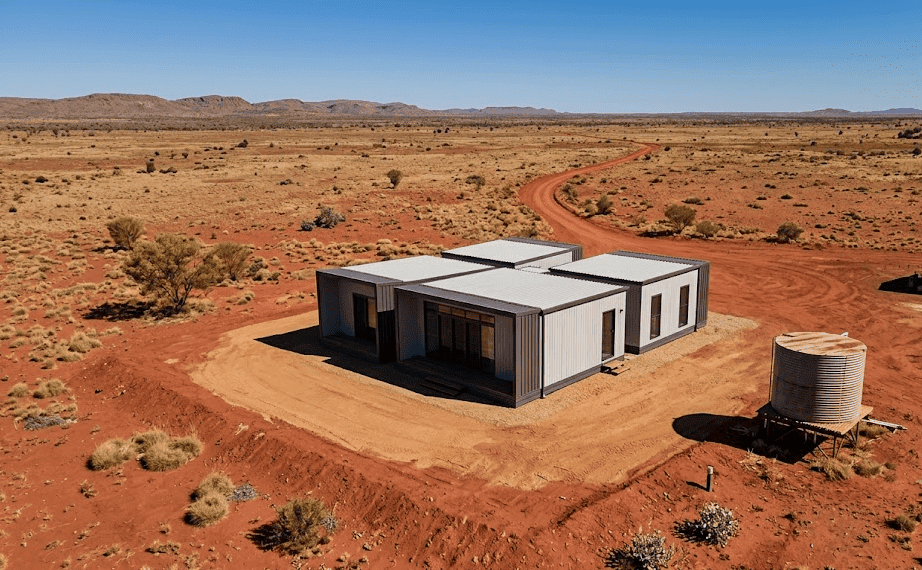
This perception is rooted in the past. Modular homes built today are constructed in controlled factory environments using the same materials, same codes, and same standards as any site-built home. They are permanent structures, fixed to foundations and designed to last for generations. Lumping them in with older mobile homes or container homes is like comparing a brand-new architecturally designed house with a fibro cottage from the 1960s. Same broad category, completely different product.
When a licensed valuer assesses a modular home, they’re not looking at how it was built. They’re looking at the finished product: location, floor plan, fixtures, finishes, and market suitability. Because modular homes are constructed with greater precision in a controlled environment, the structural consistency and quality of finish can actually work in a buyer’s favour during the valuation process. A home built to exacting standards with quality materials is exactly what valuers and future buyers want to see. At Modular WA, our homes are designed specifically for Western Australia’s unique landscapes, and a home that genuinely suits its climate and region will always hold a strong place in the market.
Myth #4: Construction Loans for Modular Builds Are Too Complicated

Construction loans have moving parts regardless of build type. But with modular construction, much of the building process happens simultaneously in a controlled factory environment rather than sequentially on site. This compresses the timeline and often reduces the number of drawdown stages, meaning fewer inspections, fewer administrative touch points, and a faster transition to a standard home loan.
Lenders want certainty, and a fixed-price contract delivers exactly that. At Modular WA, our contracts remove the ambiguity lenders dislike. The sheer speed of modular construction means your build is unlikely to be subject to multiple price hikes over the course of years, like a traditional build. Your modular home component is fixed at the contract stage – no vague estimates, and a lower risk of major cost increases or unexpected surprises. That transparency makes the entire process considerably smoother and gives lenders the greater confidence they need to move forward efficiently. Getting pre-approved early is equally important. Knowing your borrowing capacity before the design phase means every decision is made with clarity, and a significant portion of the groundwork with your lender is already done by the time you’re ready to proceed.
Something that doesn’t get said enough is that the builder you choose has a direct impact on how smoothly your construction loan runs. Lenders are far more comfortable financing projects with experienced, reputable builders who have a proven track record of delivering on time and to specification. Modular WA has been delivering quality homes across Western Australia for decades, and that experience means we understand exactly what lenders need at every stage of the process. When your builder knows the system as well as we do, the financing side of things becomes far less daunting than most people expect.
Myth #5: You Can’t Use Government Grants for Modular Homes

Most government schemes assess eligibility based on the buyer’s circumstances and the property’s compliance with relevant standards, not construction methodology. The First Home Owner Grant in WA is available for new home builds, and modular homes are not excluded. Stamp duty concessions follow the same principle. Don’t assume you’re ineligible before you’ve actually checked, because that assumption alone could cost you thousands.
One thing that often gets overlooked is how your builder’s pricing structure affects grant eligibility. Most schemes assess eligibility based on total project value, which makes a clear fixed-price contract essential. The transparency that modular construction offers can make the grant application process smoother and removes the cost variation headaches that can complicate traditional construction applications. Our advice is simple: never assume you’re ineligible. Speak to a broker or contact the State Revenue Office of WA directly, and get clarity before making any financial decisions based on what you’ve heard through the grapevine.
Myth #6: Finance Approval Takes Much Longer for Modular Homes

Approval timelines have far more to do with your financial preparation and documentation than with the build type. A generation ago, valuers were less familiar with modular products, and lenders had fewer established frameworks for assessing these loans. That world looks very different today. The modular industry has matured, lenders have developed clear processes, and the barriers that once existed have largely been dismantled by the growing track record of quality builders. The most common culprits behind delays now are incomplete documentation, unsettled land purchase, or no pre-approval in place before planning began. Every single one of these is within a buyer’s control.
Because modular homes are constructed in a controlled factory environment alongside site preparation, the overall build timeline is significantly shorter than a traditional site-built home. That means you transition from a construction loan to a standard home loan faster, without the delays and sequential trade scheduling that stretch traditional build timelines. At Modular WA, we work directly alongside our clients and their finance teams throughout the entire process, making sure nothing falls through the cracks.
The bottom line is straightforward: finance approval for a modular home is not inherently slower, more complex, or more stressful than any other new home build. With the right preparation, a reputable builder, and a lender familiar with modular construction, the entire financing process can be one of the most efficient parts of your journey toward a new home.
The Truth Was Never as Complicated as the Myths Made It Sound
So, how many of these myths had you believing that finance was the obstacle standing between you and your modular home? These common misconceptions have quietly talked a lot of people out of exploring one of the smartest, most efficient ways to build in Western Australia today. The modular industry has come a long way; lenders are on board, government grants are accessible, and the quality of what we build speaks for itself. At Modular WA, we believe an informed client is a confident client, and confident clients make great decisions. If you’re ready to take that first step toward your future home, visit us at modularwa.com.au and let’s start the conversation.
