
Should you choose factory-built modular construction or a traditional on-site build?
While both methods can deliver a high-quality home, the way they are built, managed and delivered differs significantly. In Western Australia, where distance, trade availability and site access can influence project outcomes, understanding these differences is essential before making a decision.
What Is a Factory-Built Home?
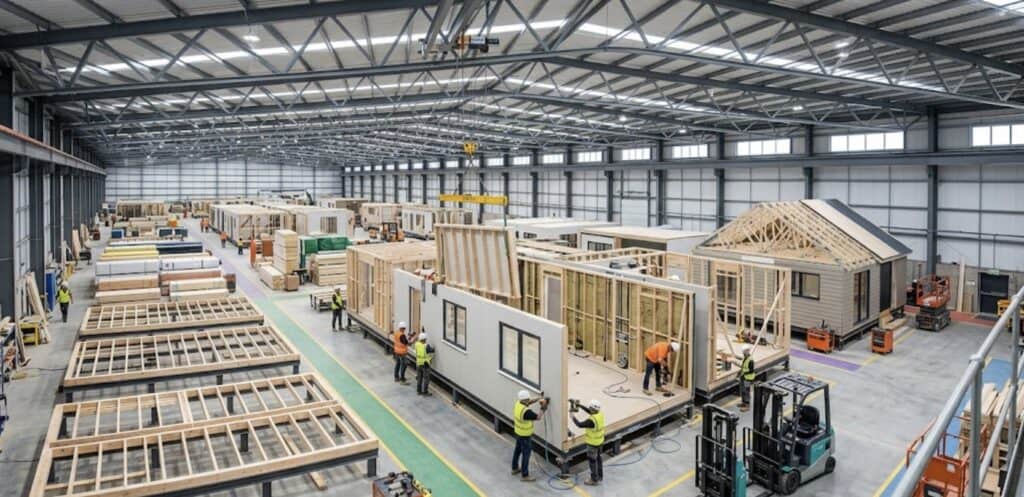
Factory-built homes, often referred to as modular homes, or prefabricated homes, are constructed in sections within a controlled manufacturing facility. Once completed, the modules are transported to the building site and installed onto prepared foundations.
This approach shifts much of the construction process away from the building site and into a regulated factory environment.
What Is a Traditional Build?
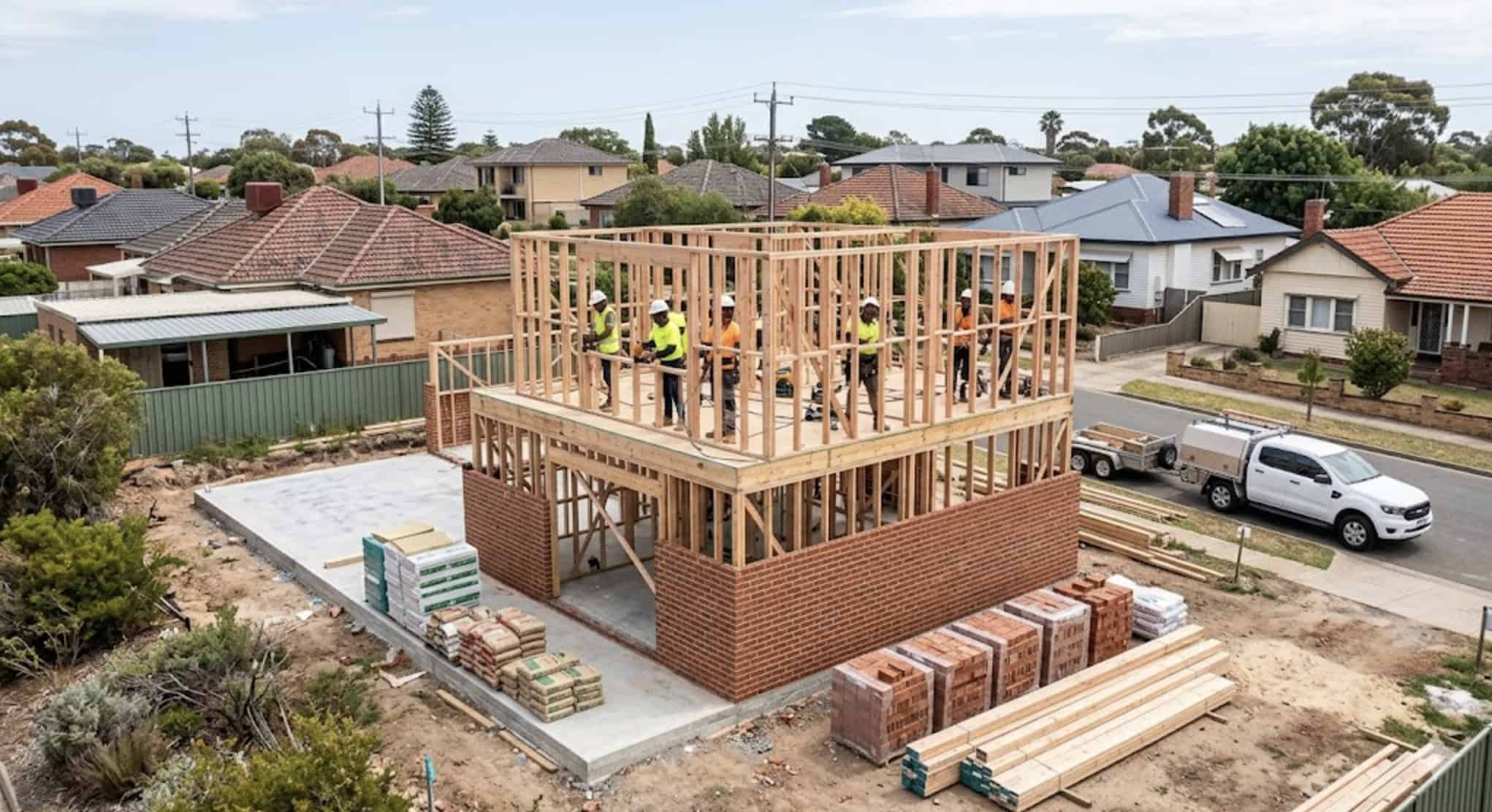
Traditional construction involves building the entire home on-site from the ground up. Materials are delivered to the block, and trades complete each stage sequentially, including framing, roofing, internal works and finishes. Traditional construction can either be double brick, framed, or brick veneer – the key component being that it is built in-situ.
This method has been the standard across Australia for decades and remains widely used in metropolitan and suburban areas.
Construction Timeline
One of the most noticeable differences between factory-built and traditional builds is time.
Factory-Built Timeline
Because modules are built indoors, weather delays are significantly reduced. Site preparation and earthworks can often occur simultaneously while the home is being manufactured. Once delivered, installation and final connections are typically completed in a shorter timeframe compared to full on-site construction.
This parallel process can reduce overall build time, particularly in regional or remote locations, as there is less risk of labour and transport route shortages, and less need to transport materials across long distances and accommodate teams in isolated towns.
Traditional Build Timeline
Traditional homes are more exposed to weather interruptions. Rain, extreme heat or material supply delays can impact progress. Each trade must complete their stage before the next begins, which can extend the overall timeline.
While timelines vary depending on builder and complexity, traditional builds may take longer due to site-dependent conditions. This is especially a problem in regional and remote areas, as logistics, labour, and accommodation can be extremely limited and costly.
Quality Control and Consistency
Quality outcomes depend heavily on process management.
Controlled Factory Environment
Factory-built homes benefit from consistent working conditions. Materials are stored in protected environments, and trades operate within structured systems. This can lead to greater consistency in workmanship and reduced material wastage.
Because construction occurs in a controlled setting, there is less risk of weather-related damage during the build phase, more efficiency in material consumption, and each and every build can be inspected regularly as the homes are built under constant supervision during their manufacture – as opposed to being visited occasionally by travelling site teams.
On-Site Construction Variables
Traditional builds rely heavily on site conditions. Weather exposure, subcontractor scheduling and material storage all influence final quality. Experienced builders manage these variables effectively, but there are naturally more external factors to consider.
Cost Structure and Budget Predictability
Both construction methods involve similar core expenses such as materials, labour and compliance requirements. However, how costs are structured can differ.
Factory-Built Cost Considerations
Factory-built projects often provide clearer upfront pricing for the home itself, as manufacturing processes are standardised and less influenced by site-based variables. Because manufacturing processes are standardised, there can be greater cost predictability during the production phase. It is easier to lock in pricing for manufactured components, especially when the window of risk is shorter. When a build takes 12 weeks, your exposure to fluctuations is minimal when compared to a build that takes 3 years.
However, remember transport, crane hire and site preparation must be factored into the overall budget, particularly in remote areas.
Traditional Build Cost Considerations
Traditional builds may allow more flexibility in sourcing materials or modifying plans during construction. At the same time, on-site variations or unforeseen site conditions can sometimes lead to cost adjustments.
In both cases, detailed quotations and clear documentation are essential for budget management.
Site Suitability and Location
Location plays a major role when comparing these two approaches.
Factory-built homes are particularly well-suited to regional and remote Western Australia, where long distances, limited local trades, and variable site conditions can make extended on-site construction more complex. Traditional builds remain highly practical in established metropolitan regions where trades, suppliers and infrastructure are readily available.
Design Flexibility
There is a common misconception that factory-built homes are limited in design.
Every modular home built by Modular WA is completely customisable. Our in-house design team makes it possible to tailor your build to your unique requirements. Modern modular construction offers a wide range of layouts, façade options and finish selections. While certain structural parameters must be considered for transport, design flexibility is only limited by the maximum module dimensions.
Traditional builds may offer slightly more freedom in highly complex architectural designs, particularly for irregular block shapes or unique structural concepts.
Environmental Impact
Sustainability is increasingly influencing building decisions.
Factory-based construction can reduce material waste due to precise manufacturing processes. Factory assembly also limits weather-related material damage due to extreme weather such as cyclones and flooding that may be experienced in parts of Western Australia.
Traditional builds may generate more site waste, though sustainable practices can be implemented in either method depending on builder standards and material selection.
Which Option Is Right for You?
The choice between factory-built and traditional construction depends on project goals, budget, site location and timeline expectations.
For regional and remote projects in Western Australia, modular construction can provide many logistical advantages and greater control over build time. In metropolitan areas with strong trade availability, traditional construction may remain the most practical option.
Modular WA focuses on delivering factory-built homes tailored to regional and remote Western Australia, where controlled construction processes and efficient installation can offer significant benefits.
Final Thoughts
Both factory-built and traditional builds can deliver durable, high-quality homes when managed by experienced professionals. The key differences lie in the construction environment, timeline management, cost predictability and site logistics.
By carefully evaluating your site conditions, budget and location, you can determine which building approach offers the most practical and predictable outcome for your project. A clear understanding of both methods ensures that the final decision is based on practical considerations rather than assumptions.
